
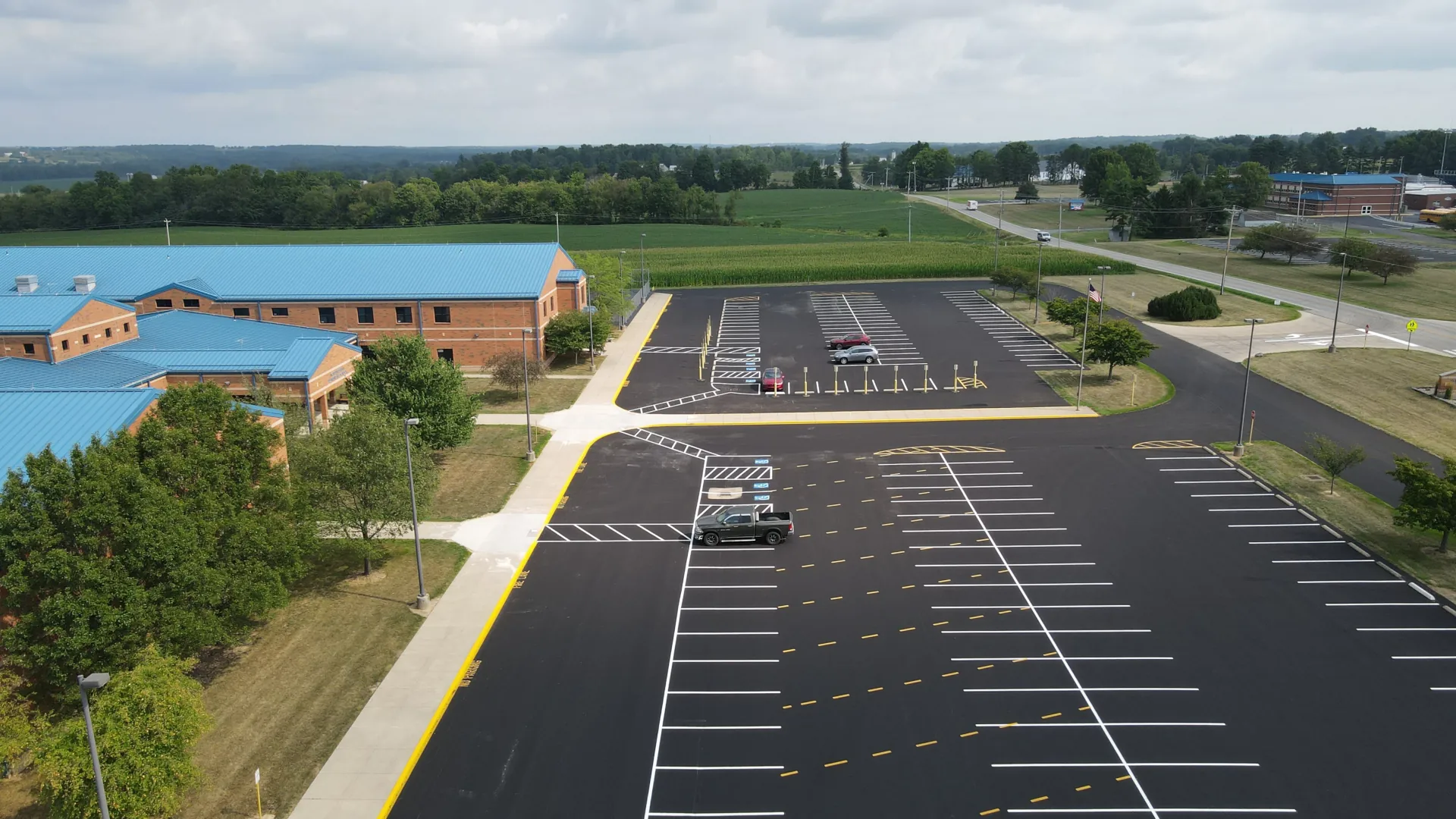
Spring Parking Lot Maintenance: Grading, Patching, and Drainage
March 3, 2026
March 3, 2026
Winter is hard on commercial asphalt. Snowplows scrape surfaces, salt accelerates wear, and freeze-thaw cycles push small cracks into major surface failures. By the time spring arrives in Ohio, many business owners and property managers are left staring at potholes, drainage problems, and surface deterioration that can’t be ignored.
Spring is not just a repair season. It is assessment season. Addressing grading and patching early prevents larger expenses later and protects your property’s safety, appearance, and long-term value. Here’s what commercial property owners need to know about preparing their lots for the months ahead.
Commercial lots take on heavy traffic daily. Delivery trucks, employee vehicles, customers, and service equipment all put stress on asphalt surfaces. When winter moisture seeps into cracks and freezes, expansion weakens the structure beneath the surface.
By early spring, common issues include:
Ignoring these signs leads to accelerated deterioration. Proactive commercial paving maintenance reduces liability risks and protects your investment before summer heat compounds the damage.
Many parking lot problems begin below the asphalt surface. Poor drainage or shifting soil can undermine even newer pavement. That is why excavation and grading are critical components of long-term parking lot repair.
Proper grading ensures:
If water consistently pools in certain areas, patching alone will not solve the problem. Regrading sections of the lot may be necessary to restore proper slope and drainage. Addressing these underlying issues prevents repeat repairs and extends the lifespan of the asphalt.
Spring is the ideal time to evaluate drainage patterns. Heavy snowmelt and spring rain reveal exactly where water collects and where grading corrections may be needed.
Asphalt patching is one of the most effective spring repair strategies when damage is localized. Rather than replacing an entire lot, patching targets specific problem areas such as potholes or sections of severe cracking.
High-quality asphalt patching involves:
Temporary “throw and go” patches may seem cost-effective, but they rarely last. Professional patching restores structural integrity and blends with the surrounding pavement for long-term performance.
Commercial property owners should prioritize patching in:
Addressing these areas first improves safety and customer experience immediately.
Uneven pavement is more than an inconvenience. It is a liability risk. Trip hazards, standing water, and deep potholes increase the chance of vehicle damage or personal injury claims.
Routine parking lot repair demonstrates proactive property management and reduces exposure to potential claims. For businesses that rely on foot traffic, retail centers, medical offices, churches, and schools, maintaining safe pavement conditions is essential.
Spring repairs also enhance curb appeal. A well-maintained lot communicates professionalism and care before customers ever walk through the door.
Not every spring issue can be solved with patching. Sometimes winter damage reveals that larger resurfacing or reconstruction work is approaching.
Warning signs that more extensive commercial paving may be needed include:
Spring inspections help determine whether targeted repairs are sufficient or if budgeting for a larger summer project makes more sense. Early planning allows businesses to schedule work before peak paving season fills up. You can see the range of work Kingsway tackles on our projects page.
The most cost-effective strategy is rarely reactive. It is proactive.
A smart spring plan typically includes:
This layered approach protects the base, preserves the surface, and controls long-term costs.
Commercial lots in Tuscarawas, Coshocton, Stark, Holmes, and Wayne counties experience similar winter stresses, but site conditions vary. Soil composition, traffic volume, and drainage layout all influence the best repair strategy.
Working with an experienced asphalt contractor ensures that repairs are based on site-specific evaluation rather than one-size-fits-all solutions. Excavation and grading decisions, in particular, require local knowledge and practical experience.
By the time summer arrives, repair schedules are often booked, and pavement damage has worsened. Addressing issues early in the spring minimizes disruption and prevents small problems from escalating into major reconstruction projects.
Commercial paving maintenance is not just about fixing what is broken. It is about protecting your property’s functionality, safety, and long-term value.
If your parking lot took a beating this winter, now is the time to evaluate grading, patching, and structural needs before peak season begins. Contact Kingsway Services today.